
Tag: Beautiful Truth

  • America to Trump: The Party’s Over — Georgia just Lit the Match

    America to Trump: The Party’s Over — Georgia just Lit the Match

    Georgia didn’t just vote — it reminded America who really holds the power.


    “America didn’t just move on — she packed Trump’s suitcase, changed the locks, and left his orange bronzer in the driveway.”


    Spread the truth:
  • Trump’s Selective Mercy: From Pardon Politics to Predator Protection

    Trump’s Selective Mercy: From Pardon Politics to Predator Protection

    When “law and order” starts taking orders from influence.


    Spread the truth:
  • When Black Feet Were the Problem, But White Hands Get a Pass

    When Black Feet Were the Problem, But White Hands Get a Pass

    America’s outrage has always depended on the color of the shoes in the room.


    Spread the truth:
  • Black Women Were Sold Education and Lost Stability

    Black Women Were Sold Education and Lost Stability


    “White America told us to get the education, the degrees, the certifications — and when we did, they shut the doors we built our futures on.”


    Spread the truth:
  • The Politics of Contradiction: Kash Patel vs. Civil Rights

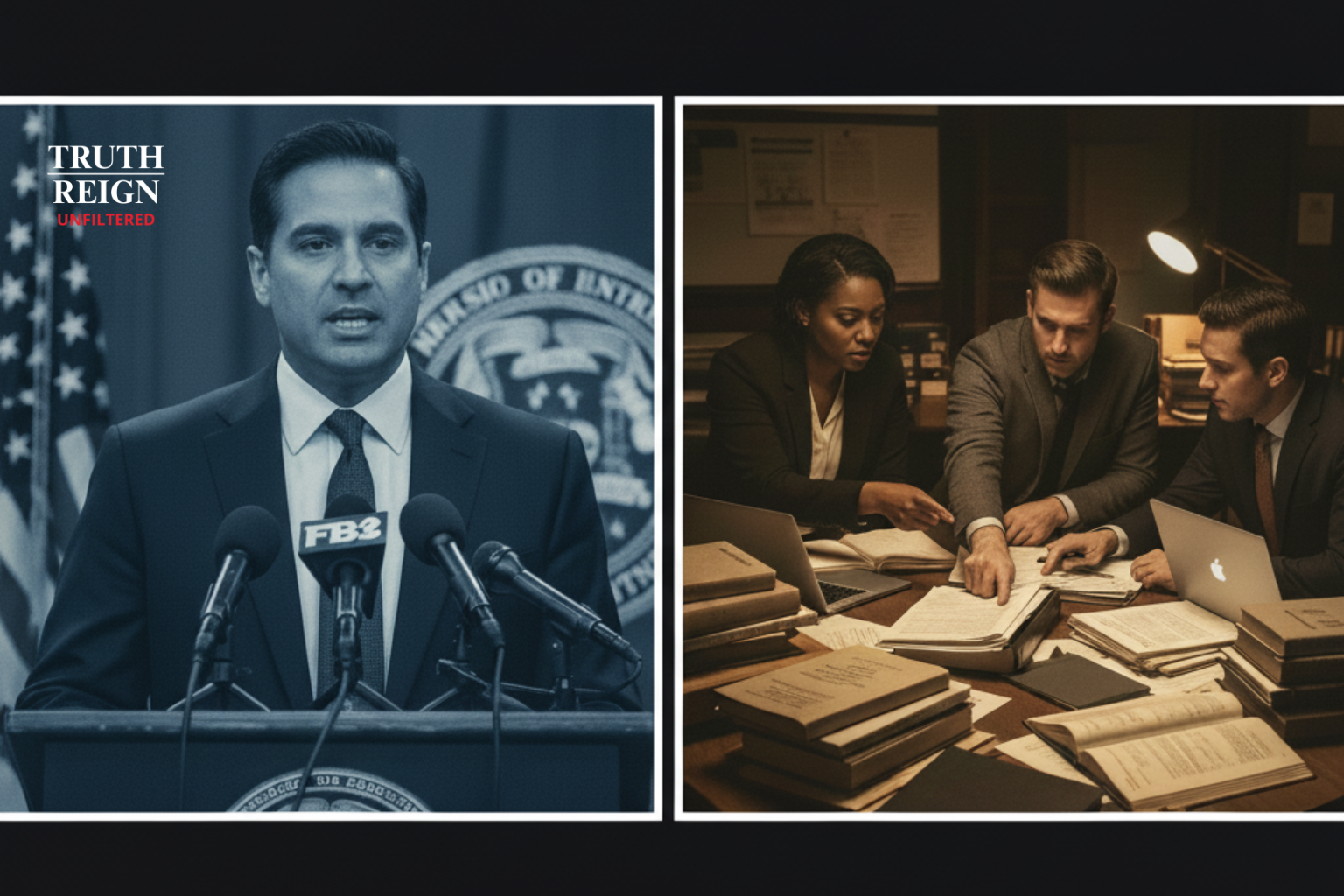
    The Politics of Contradiction: Kash Patel vs. Civil Rights


    Spread the truth:
  • Nicki Minaj & Cardi B Conflict and Its Cultural Impact

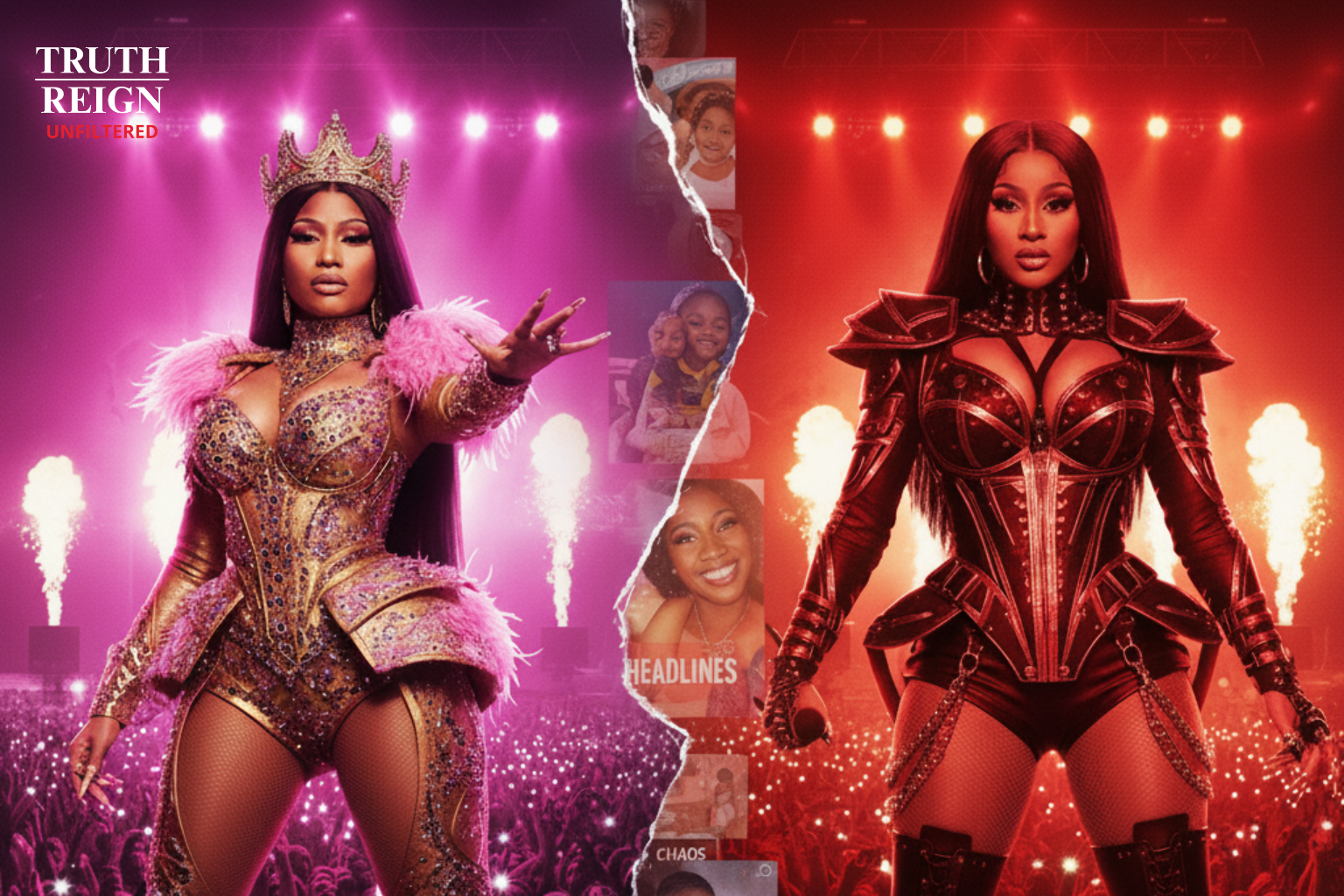
    Nicki Minaj & Cardi B Conflict and Its Cultural Impact


    Spread the truth:
  • Mystikal Music Legacy Crumbles: A Cultural Impact

    Mystikal Music Legacy Crumbles: A Cultural Impact

    The Rise and Fall of a Voice That Once Shook Hip-Hop

    Source acknowledgment: Coverage drawn from WAFB, Okayplayer, and other public reports of Mystikal’s 2022 indictment and ongoing hearings.


    — Beautiful Truth


    Spread the truth:
  • The Painful Truth of Domestic Violence: Love, Silence, and Survival

    The Painful Truth of Domestic Violence: Love, Silence, and Survival

    A tragedy shared by T-Hood and Kelsie – and the questions we can’t ignore.


    This commentary is informed by verified coverage from TMZ, Complex, Atlanta Black Star, 11Alive News and Los Angeles Times, (Aug 2025)


    This commentary looks at the tragedy of T-Hood and Kelsie — a story of abuse, silence, and the breaking point that left two families shattered. It examines Kelsie’s survival in silence, her brother Ky’s role as both witness and last resort, and the ways both families avoided accountability. At its core, this piece is about how silence protects violence, isolates victims, and leaves scars that never truly heal.

    T-Hood’s name carried weight in Atlanta’s music scene. To the public, he was a hustler, an artist, a man grinding his way up. But behind the lights and noise, the truth was much harder. His relationship with Kelsie wasn’t some hip-hop love story — it was a storm she carried in silence.

    Kelsie wasn’t without options. She had family. She had people who could have stepped in, maybe even tried to. But options on paper don’t always equal safety in reality. Anyone who’s lived through abuse knows the math — involving family can bring its own dangers, its own shame, its own chaos. Sometimes silence feels like the only way to survive another day.

    That’s the part outsiders never want to admit: you can know someone’s demeanor has changed, you can sense something’s off, and still do nothing. Because stepping in means putting your hands in the fire too. And too often, people decide they’d rather not get burned.

    Ky’s role may look like it began the night of the shooting, but the truth is, it may have started long before. Living in the same complex as his sister wasn’t likely by accident — at least, that’s what I perceive from the information I have and the gaps I don’t. Allegedly, being that close meant he didn’t have to be told what was happening — he could see it. He may have noticed the way her voice changed, the way her steps grew slower, the way her light dimmed. Silence doesn’t always mean ignorance. Sometimes it means watching, day after day, until the weight of what you see can no longer be ignored.

    And when that night came, Ky didn’t just step in by chance — he became the last resort. At least that’s how it looks when fathers stay quiet, when stepmothers look away, and when communities shrug their shoulders. The burden falls on the brother standing closest. That’s not protection by choice — that’s desperation born out of failure. Allegedly, he didn’t act because he wanted to carry that weight. He acted because no one else had. By then, the silence had already written the ending.

    T-Hood’s death wasn’t just sudden — it was violent, final, and delivered by Ky, the brother who finally did what silence had failed to prevent. In one moment, the weight of years of unspoken abuse exploded, leaving a man dead, a woman shattered, and a family broken in ways that can never be fully mended.

    The tragedy wasn’t just in his death. The tragedy is that long before the bullet was fired, silence had already taken root. And in that silence, Kelsie was left to figure out survival on her own.

    Kelsie’s family stayed quiet on her pain. T-Hood’s family may have stayed quiet on his violence. And when two silences meet, the result is always the same — tragedy.

    In the days after T-Hood’s death, it was his mother and sister who came out the loudest. They pointed fingers, made accusations, tried to redirect the blame before the truth had even settled. Maybe that was grief talking. Maybe denial. But what it wasn’t — was accountability. Even now, their voices sound carefully measured, their words circling around something deeper.

    They even posted a recording of a phone call, later shared by The Neighborhood Talk. In it, Kelsie allegedly tells one of T-Hood’s family members, “I don’t condone that sh*t, brother or not.” Her words mattered — it showed she wasn’t blind to the violence around her. But words alone weren’t enough to stop what was already in motion.

    Because abuse doesn’t start overnight. A man doesn’t just wake up one morning and begin breaking the woman he claims to love. Violence has roots — planted in what’s seen, what’s normalized, what’s excused. That’s the piece too many families never want to admit. If T-Hood carried that violence into adulthood, then the question is what shaped it in the first place — and who chose to look away instead of pulling it up by the root.

    Even today, the story from his family feels unresolved. They talk, but they don’t tell. They grieve, but they don’t acknowledge. And in that refusal, the silence continues.

    And while his family tried to deflect, Kelsie’s side stayed quiet. Her father, Kirk, and her stepmother, Rasheeda, had platforms and voices that could have named the abuse for what it was. Instead, silence stretched across both sides. On one, pain was hidden. On the other, violence was denied. Both silences fed each other, until the breaking point came and nothing could be undone.

    This is what the cycle of silence looks like. The cycle protects the abuser. Victims are left isolated. Families fractures under the silence. And when the cycle finally shatters, it doesn’t just break one life — it leaves generations carrying pain that never dies, only changes form.

    Kelsie didn’t just survive something most people wouldn’t understand — she survived it while living in the shadow of people with power, platforms, and voices loud enough to shift public narratives. She lived through pain while being connected to people who knew how to tell stories, craft images, and get messages out to the world. And yet when it was her story — her safety, her trauma — there was silence.

    Kirk and Rasheeda Frost have built a career on letting the world into their lives. For years, they’ve invited cameras into their marriage, their home, and even their conflicts. They’ve turned pain into storylines and private matters into entertainment. But when it came to Kelsie’s pain, and to the death of T-Hood, suddenly the cameras went dark. Suddenly, the voices that never had a problem speaking before went silent.

    That silence is loud. It’s especially loud when you remember Rasheeda’s past — the way she publicly dismissed K. Michelle’s abuse allegations years ago, framing them as drama instead of trauma. Now, faced with abuse that hit inside her own family, the quiet feels less like respect and more like strategy. Silence can protect reputations, but it doesn’t protect victims.

    And it isn’t just them. Families, communities, churches — too many people go quiet when faced with abuse. They choose peace over truth, image over safety. But silence doesn’t erase the bruises, the fear, or damage. It only guarantees that when the breaking point comes, it will be catastrophic.

    The Frosts aren’t the first to choose silence, and they won’t be the last. But when you’ve made a living off telling everyone else’s story, your refusal to speak on your own family’s tragedy says everything.

    And that’s the truth nobody wants to admit — silence doesn’t just hide the pain, it hands it down. When families and communities refuse to confront it, the cycle only grows stronger.


    If my words make even one person speak up sooner, protect someone louder, or choose truth over comfort—then my words have already done more than silence ever could.


    — Beautiful Truth


    Spread the truth:
  • Black Women Want to Be White?

    Black Women Want to Be White?

    The Double Standards Behind the Accusation.


    Disclosure: This commentary was originally published on NewsBreak. I’ve chosen to republish it here on Truth Reign Unfiltered so it can live without platform filters, edits, shadow bans, or bias.


    BuzzFeed reports that Serena Williams is once again facing public scrutiny after posting selfies showing a slimmer, more toned frame many claimed means she is “trying to be White.” But this isn’t just about Serena — it’s part of a pattern.


    Why do White Americans care so much about what black women do?”

    White America has been borrowing from black culture for as long as we have existed. From our music to our style, from the way we speak to the food we make, we’ve created the blueprint. And time after time, those same creations are stripped from us, rebranded, and sold back to the world without our name on them. We innovate — they imitate.

    This was never just about hair or body shape. For us as black people — myself included — it has never been about appearance, but about how they try to control our every move. The problem is, their words rarely match their actions. Their language is only a cover for something much bigger. They can dress it up as aesthetics or standards all they want, but putting lipstick on a pig doesn’t make it anything other than a pig. At the end of the day, it isn’t about beauty or presentation — it’s about power.

    They say imitation is the highest form of flattery — but flattery feels hollow when it comes with erasure.”

    Serena herself recently spoke out in an exclusive with People, confirming that she chose to use a GLP-1 weight-loss medication after diet and exercise alone weren’t enough. She lost over 31 pounds and said the treatment helped her feel physically lighter and mentally stronger. For her, this wasn’t about bending to outside pressure — it was about doing what worked for her body and her health.

    And that’s the point. Serena’s weight loss wasn’t a performance for the public. It was a choice for herself, her health, and her peace of mind. The problem is, people keep confusing her personal journey with their expectations of her body. She doesn’t owe anyone a role in their story of strength or symbolism — she owes herself the freedom to live how she chooses.

    Let me be perfectly clear — this has nothing to do with Serena Williams wanting to be White. Changing our hair has always been part of who we are as black women, something I know from my own life. It’s self-expression, creativity, and versatility — not a surrender of identity.

    Make no mistake — White people didn’t create fairness. What they created, perfected, and practically patented was the double standard. They will criticize us relentlessly, then turn around and praise the same things when they come from them. We’re called ghetto for speaking in our natural rhythms, but when those same cadences are echoed by White influencers, it’s suddenly trendy and authentic.

    And let me sit this right here — Jordan Peele’s Get Out wasn’t just a horror film. It was a mirror. A warning. A metaphor for how White America consumes blackness — craving our physicality, talent, and essence, but wanting it detached from us. That’s what this feels like: not just borrowing, but rewriting the origin story, erasing the source, and keeping the profit.

    Not all movies are made for entertainment. Even during slavery, our people had to become creative with words and actions — singing psalms, spirituals, and coded songs as tools of survival and escape. Peele’s film, in my opinion, is cut from that same cloth. It’s not just storytelling; it’s a reminder to be careful about who you align yourself with, and a warning about what lies beneath the surface.

    And that brings me back to Serena. Somehow, Serena was celebrated when she fit their approved image of dominance in sports. Now that she’s chosen a new chapter, they question if she still belongs.

    The burden of being watched, judged, and second-guessed for every choice is one that black women know all too well.

    So maybe the question isn’t why Serena made the choices she did. The real question is why does White America care so much when we make them?


    Spread the truth:
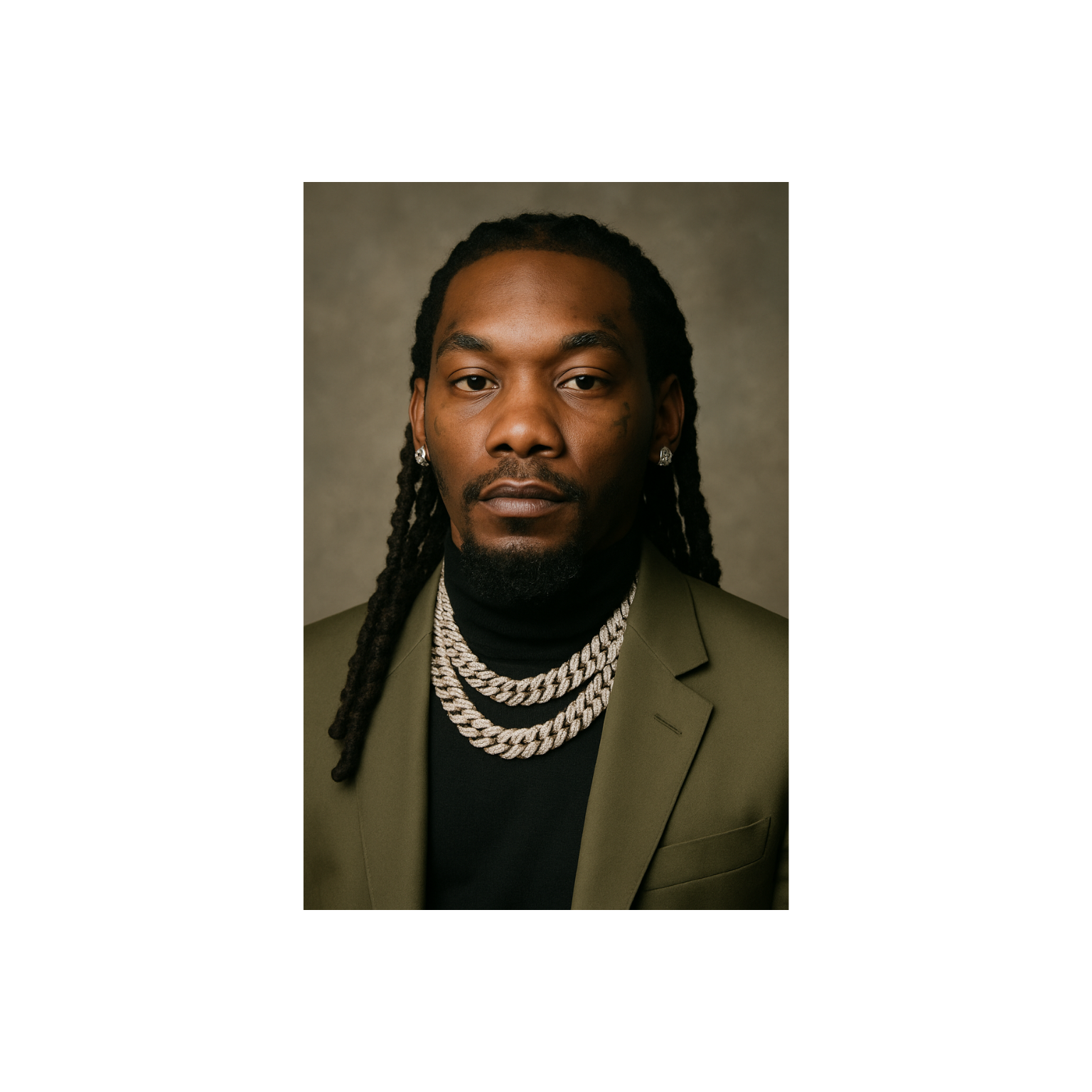
  • Offset’s Warning About Marriage: Truth or Deflection?

    Offset’s Warning About Marriage: Truth or Deflection?

    What he called a warning is really the assignment.

    Source: In a recent one-on-one interview with Culture Millennials, Offset said that men shouldn’t get married unless they’re ready to change their lives, adding that marriage broke him. His comments have since surfaced all over social media, sparking conversation about love, commitment, and responsibility.


    SUMMARY

    Offset’s words aren’t just sitting in an interview — they’ve gone viral across social media. People are debating whether his take reflects hard-earned truth, deflection, or a warning about the pressures of love and commitment in the public eye.

    Offset, you said men shouldn’t get married unless they’re ready to change their lives. And I agree with you — marriage will change your life. That’s the point. But change isn’t punishment. Change is growth. Two people leaving behind selfishness to build something bigger than themselves — that’s what marriage is.

    You also said marriage broke you. No — marriage didn’t break you, it revealed you. Marriage doesn’t destroy people. It shows who they really are. If you walk in dishonest, inconsistent, and selfish, then that’s what the marriage will expose.

    And you blamed temptation. Offset, temptation will always be there. Fame or no fame, women will always be around. But discipline is the difference between a boy who acts on impulse and a man who protects what’s his.

    You have discipline in music, money, and business — so why couldn’t you apply that same discipline to your vows?

    But here’s what makes this even more damaging — and why your words carried more than just your own story.

    A lot of men out here never had a real foundation for what a healthy marriage even looks like.

    And let’s be honest — if your father didn’t show up, didn’t lead with love, didn’t model partnership, or couldn’t even stay — how would you know what emotional consistency looks like?

    That’s that’s why your words hit deeper:
    Because too many men aren’t failing at marriage. They’re failing at unlearning what broken love taught them.

    So instead of unlearning the damage, too many men just avoid the responsibility. And they call that strength.

    But it’s not strength. It’s avoidance dressed up as confidence — and it ‘s why so many men perform husbandhood instead of living it.

    Then there were your apologies, theI want to be a better man” speeches, the public displays of love. That’s nice, but words without changed behavior are just performance. Love isn’t proven in a ring, or in flowers after the fight — it’s proven in everyday consistency, when nobody’s watching.

    And since I’m speaking honestly — you once said you were too young to settle down. So why did you?

    Marriage isn’t a hobby. It’s not something you try on just to see how it fits. If you weren’t ready, you should’ve stayed single instead of dragging someone else into vows you weren’t willing to keep.

    “Don’t wear another man’s failures like armor. Don’t repeat his excuses and call it wisdom.”

    So, here’s my truth, — not just for you, Offset, but for every man listening:
    Yes, marriage will change you.
    Yes, it will test you.
    But that’s what it’s supposed to do.
    And if you’re not willing to compromise, respect, listen, and love with consistency, then no, you’re not ready for marriage.

    And women, hear me too — stop ignoring red flags and calling them potential. If his behavior isn’t marriage material, don’t convince yourself the vows will fix him. They won’t.

    Offset, your words carried, but they carried irresponsibility. And what they reveal is that accountability was too heavy for you to carry.

    — Beautiful Truth


    Spread the truth:
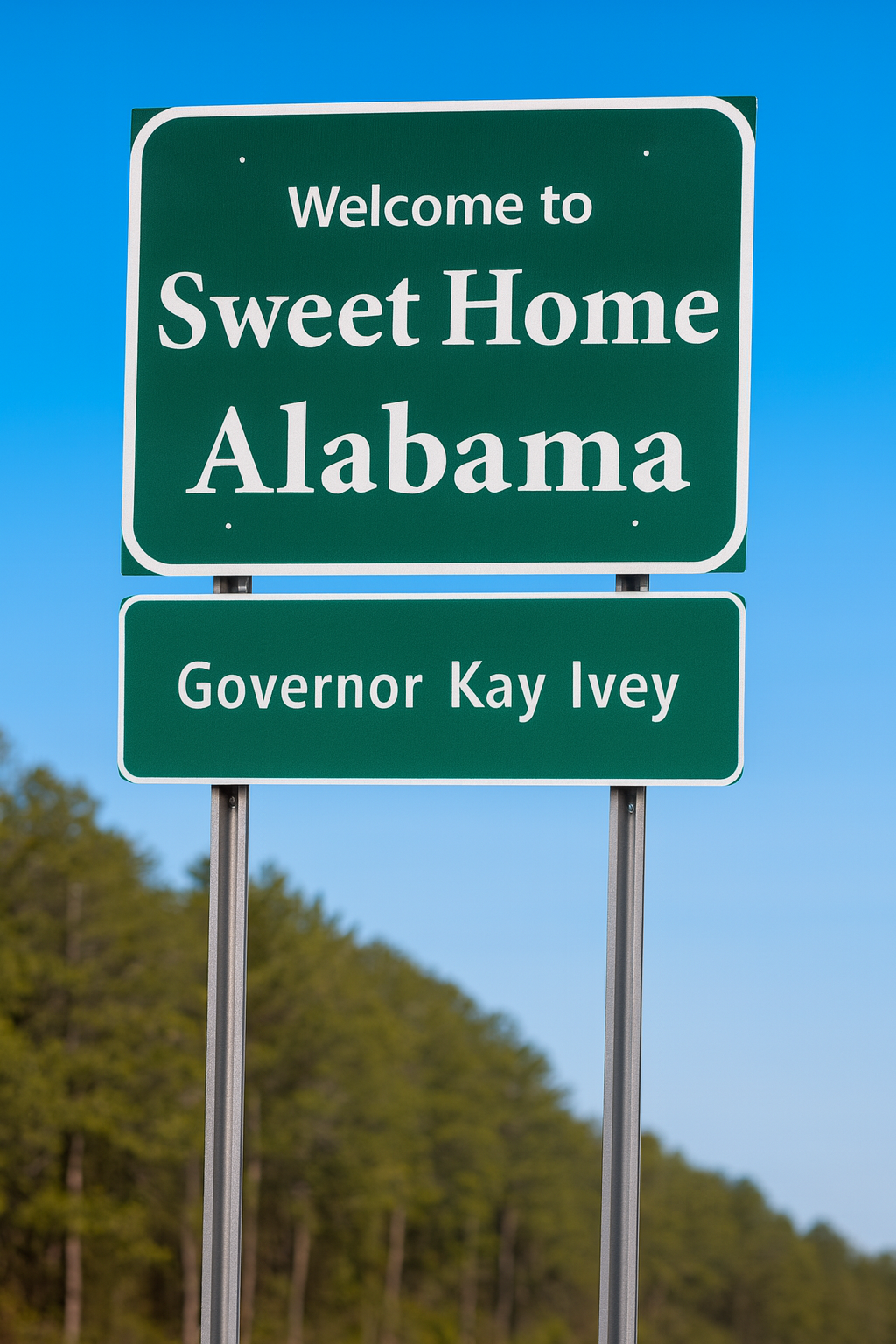
  • Fairness Finally Calls Out Alabama’s Maps

    Fairness Finally Calls Out Alabama’s Maps

    A ruling that forces fairness onto maps long drawn to silence black voices.


    A Trump-appointed judge just ruled that Alabama must redraw its Senate map to include a new majority-black district in Montgomery. I see this as a clear win for black voters, even though Huntsville was left behind. And with every legislative seat up for grabs in the 2026 elections, the timing matters more than ever. (Source: Black Enterprise)

    This ruling is long overdue, and let me be clear — this is what fairness looks like. If black people make up 27% of Alabama, how in the name of sweet Jesus can you justify maps that give them only one real shot at electing somebody who speaks for them? That’s not an oversight; that’s intentional. That’s how power protects itself.

    Here’s the icing on the cake: this wasn’t some liberal judge. This was a Trump-appointed judge. And to me, that proves how obvious the discrimination was. The evidence was so blatant it couldn’t be ignored, not even by someone from an administration that spent years peddling voter suppression talking points.

    But I’m not about to sugarcoat it. Montgomery gets a win, but Huntsville got left out. That’s the game Alabama plays: give us just enough change to shut us up, while the rest of the map still keeps black voices locked out. That’s not full justice — that’s crumbs tossed out and called a meal.

    The decision to leave Huntsville untouched, the ruling shows how the system plays chess, not checkers. Courts may offer microscopic remedies, but lawmakers often respond with appeals, stalling tactics, or watered-down redraws that still weaken black representation. That’s why the fight can’t stop at Montgomery. If Huntsville remains ignored, the state’s message is clear: some voices are still negotiable.

    This same ole’ Alabama behavior of duckin’ fairness ain’t changed in decades — they’ve been dodging fairness since forever — from poll taxes, to literacy tests, to George Wallace standing in a schoolhouse door, and then in 2013 when the Supreme Court gutted the Voting Rights Act in Shelby County v. Holder. Every time, they bend the rules while hiding behind the Constitution like it’s a prop. If you’re going to wave that flag, live by what it’s supposed to stand for.

    This ruling matters because it forces Alabama to look in the mirror. A black vote in Montgomery should weigh the same as a White vote in Huntsville. Until the maps reflect that, the state is lying to itself about democracy.

    And here’s the urgency: 2026 elections are around the corner, with every legislative seat on the ballot. That’s why this decision hit nerves — because whoever draws the lines decides who gets to sit in power. And let’s be real: this isn’t just Alabama. The same fight over maps is happening in Georgia, Texas, North Carolina, and beyond. This is a coordinated effort to protect power by weakening voices.

    This isn’t just about elections. Maps shape the schools our children attend, the health care we receive, the roads we drive, and the justice systems that decide our fate. That’s why redistricting is never just a political game — it’s about everyday life.

    So yes, I’ll call this a win-win for Alabama, because fairness is never a loss. But don’t get it twisted or let the celebration fool you — progress in this state has always come with resistance nipping at its heels. And history tells me that fight isn’t over.


    Thank you for all reading–not just for opinions, but for principle, fairness and clarity.

    — Beautiful Truth


    Editorial Note:
    Truth Reign Unfiltered is an independent commentary platform that shines light where others stay quiet. All content published represents protected speech under the First Amendment of the United States Constitution. Opinions expressed are based on publicly available information, cited sources, and personal analysis.

    I do not publish to defame—but to inform, challenge, and encourage critical thought. Accountability is not hatred. Truth is not defamation. And silence is never my strategy.

    Spread the truth:
  • How a Rolling Stone Article Effaces Foundational Black Americans

    How a Rolling Stone Article Effaces Foundational Black Americans

    When blackness is used as a costume, Foundational Black Americans become invisible.


    Disclosure: This commentary was originally published on NewsBreak. I’ve chosen to republish it here on Truth Reign Unfiltered so it can live without platform filters, edits, shadow bans, or bias.


    This commentary is a direct response to the Rolling Stone article titled ICE Raids Aren’t Just a Latino Issue — Black Communities Are Also at Risk by Meagan Jordan.

    For related commentary on U.S. foreign policy and how aid, minerals, and migration collide, stay tuned. My next piece will be out early next week.


    Jordan’s article attempts to widen the immigration conversation to include black communities. But in doing so she blurs identity, erases Foundation Black Americans (FBA), and plays into a media trend that uses blackness as a marketing tool while silencing those whose lineage is tied to slavery and systemic oppression.

    What happens when blackness becomes a marketing tool, but not a lived experience? When the story is told through a blurred lens, Foundational Black Americans become invisible—even in our own struggles.

    But here’s where the issue begins: the author’s repeated use of the phrase black communities without ever defining who she’s referring to. Is she referring to Foundational Black Americans — those of us born in the United States with lineage tied to slavery — or black immigrants from Jamaica, Haiti, or Nigeria? That distinction is critical.

    By leaving it vague, the article misleads readers into believing that U.S. born black citizens are at risk of deportation by ICE — which is categorically false. That’s a distortion that plays on fear and racial solidarity without being honest about who is truly affected. And if you’re not going to be honest, then don’t speak on our name to make your article believable.

    The problem is that the system — and writers like Jordan — intentionally blurs the distinction between black immigrants and black Americans to craft a falsehood, stir emotion, and control the narrative.

    Respectfully, if you weren’t born in the United States, you’re an immigrant. Period.

    This has nothing to do with skin color — it’s about legal status and citizenship. But when it comes to resources, benefits, or political representation, black becomes a convenient box to check.

    That’s where the erasure begins.

    On college applications, government forms, and media narrative, black immigrants are often counted as black to gain access to spaces and programs born out of the blood, suffering, and activism of my ancestors — Foundational Black Americans who fought so I could stand here today. As a descendant of slavery, I see how we’re told to fight every battle, hold every sign, and show up for every protest — even when no one shows up for us.

    And too often, those who benefit remain silent while enjoying the fruit of struggles my ancestors paid for in blood and survival.

    Until it’s time to benefit — shouldn’t be the only moment blackness is claimed. — Beautiful Truth

    While some black immigrants stand in true solidarity, too many only claim blackness when it’s advantageous. When inclusion, protection, or representation are at stake, identity becomes a tool — not a truth.

    This has real consequences: resources, representation, and reparations are watered down and redirected.

    Universities, corporations, and media platforms have inflated their black inclusion numbers, but the faces promoted are often Caribbean or African immigrants, not Foundational Black Americans. Meanwhile, the very people those protections were built for are left out.

    Affirmative action? We fought for it.
    Civil rights? We bled for it.
    Voting protections? We died for them.

    Yet once progress is achieved, we’re pushed aside.

    This is not gatekeeping. It’s legacy protection.

    If the media is going to talk about immigration, tell the whole truth — who is actually affected, and who is being erased. Otherwise, blackness becomes just another costume.

    And the truth is — even when the author is black, that doesn’t erase the responsibility to be specific. Because blackness is not one story. Black immigrants and Foundational Black Americans do not share the same lineage, the same history of slavery, or the same systemic scars. So when those lines are blurred, our unique struggle gets erased — and we become invisible even in the telling of our own story.

    This is not about hate. It’s about honesty. If you are going to speak for black communities on matters of deportation and systemic oppression, then specificity and cultural understanding are non-negotiable.

    We are not interchangeable. Our history is not the same. And our justice cannot be borrowed, manipulated, or blurred to fit someone else’s headline.

    Everyone wants to share in the rewards of black struggle — representation, rights, recognition — but few are willing to do the work or tell the truth.


    — Beautiful Truth


    Disclosure:
    Truth Reign Unfiltered is an independent commentary platform that shines light where others stay quiet. All content published represents protected speech under the First Amendment of the United States Constitution. Opinions expressed are based on publicly available information, cited sources, and personal analysis.

    We do not publish to defame—but to inform, challenge, and encourage critical thought. Accountability is not hatred. Truth is not defamation. And silence is never my strategy.
    Spread the truth:
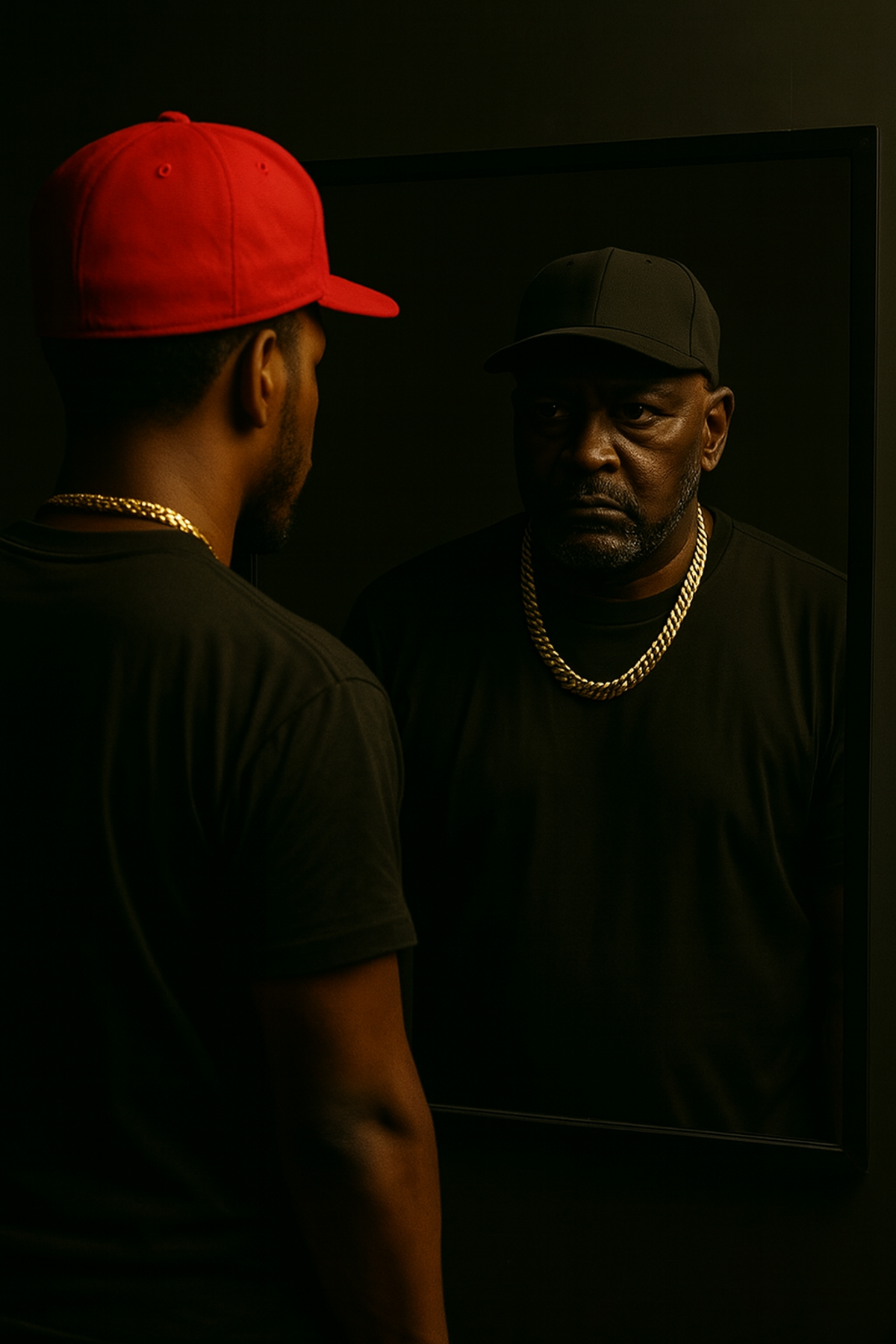
  • Trick Daddy: Not the Man in the Mirror

    Trick Daddy: Not the Man in the Mirror

    Projecting his ‘damaged goods’ theory instead of facing his own reflection.


    Disclosure: This commentary was originally published on NewsBreak. I’ve chosen to republish it here on Truth Reign Unfiltered so it can live without platform filters, edits, shadow bans, or bias.

    Source: This commentary was based on Trick Daddy’s interview with NeNe Leakes, as reported by HipHopWired on August 6, 2025, where the rapper-turned-chef claimed he is not attracted to women over 35, calling them “damaged goods” and “too emotional.”


    Trick Daddy’s comments about women over 35—labeling them damaged goods and too emotional —sparked immediate backlash. The outrage wasn’t just about what he said, but the audacity of who said it.

    TODAY’S TRUTH

    Trick Daddy damaged goods? That’s the message many heard after the Miami rapper appeared on NeNe Leakes’ talk show and declared he’s not attracted to women over 35 because they’re too emotional. It didn’t take long for that comment to spark a Set-It-Off backlash—not just because of what he said, but because of how off-base it felt coming from him.

    If you’re not familiar with him, Trick Daddy—real name Maurice Young—was once a key figure in Miami’s hip-hop scene in the late ’90s and early 2000s.

    He’s best know for songs like I’m a Thug, Take It to Da House, and his hit with Trina, Nann N**a. His 2001 album Thugs Are Us went platinum, but his success faded soon thereafter.

    At this point, it feels like the last time Trick Daddy was relevant in music, Ronald Reagan was still president. These days, he’s not known for bars—but for soundbites, gossip, and controversy.

    And lately? The mic he’s holding ain’t dropping lyrics. It’s dropping insults.

    Let’s stop pretending these viral Trick Daddy clips are just entertainment. They’re not funny. There’s no honesty in them. And more than anything? They’re just tired.

    Not long ago, he tried coming for Beyoncé. Now he’s coming for every grown woman over the age of 35. During his recent sit-down with Nene Leakes, Trick Daddy boldly claimed that women in his age group are damaged goods, too emotional, and have standards that are too high.

    And just like that, a fifty-something-year-old man with a questionable rap sheet and a disappearing career gave his unsolicited opinion on women he can’t even attract.

    Let’s me say this—not just for me, but for every woman he tried to dismiss.

    He’s already well past 50 — that’s half a century of lived experience, and yet somehow, no growth. And I say that as someone who’s also crossed that mark. The women he’s calling damaged goods have walked the same timeline as him — we just evolved. We’ve raised children and built businesses. We’ve healed from heartbreak. We’ve grown into our own power. And instead of honoring that? He labels us disposable.

    Meanwhile, his dating preference? Women aged 22 to 35.

    He’s entitled to a preference. But when preference is rooted in trauma-shaming and emotional manipulation, it stops being about attraction and starts being about control. Because what he’s really saying is: I want younger women because they haven’t learned to say no to me yet.

    When you hate the mirror, you start blaming the reflection. Beautiful Truth

    The psychology of a weak man statements like this don’t come from strength. They come from a man who sees a confident woman and feels threatened—not intrigued.

    Calling women damaged for having boundaries, expectations, and emotional depth is a classic tactic of shallow and insecure men who can’t mentally level-up to where she is.

    And let’s not forget the deepest irony of all this: this is the same man who once proudly admitted that he lets women eat his backside (Why? 🤢 ) But somehow, it’s the women who are damaged goods. Trick—please.

    Let’s not confuse preference with projection. One reflects desire. The other exposes insecurity.

    Aging is not a curse. For many of us, it’s the moment when clarity kicks in. When our confidence matures. When our self-worth stops being negotiable. And the more that happens, the more these types of men get uncomfortable—because they’re no longer the standard.

    So when Trick Daddy talks about what he won’t date, let’s be clear—this isn’t about who he doesn’t want. This is about the women who have outgrown him, and who no longer want him.


    — Beautiful Truth


    Editorial Note:
    Truth Reign Unfiltered is an independent commentary platform that shines light where others stay quiet. All content published represents protected speech under the First Amendment of the United States Constitution. Opinions expressed are based on publicly available information, cited sources, and personal analysis.

    We do not publish to defame—but to inform, challenge, and encourage critical thought. Accountability is not hatred. Truth is not defamation. And silence is never our strategy.

    Spread the truth:
  • Welcome to the Reign

    Welcome to the Reign

    Since launching this journey in November 2024, I’ve written a lot. Commentary after commentary–some short–but all rooted in what was happening in our country at the time. Most of those pieces were originally published on NewsBreak. What many don’t realize is that those were just snippets—a portion of the full truth I had to share.

    Now that I’ve built a platform of my own, I’ll be reposting some of those original articles here on Truth Reign Unfiltered. But not everything will return as a full repost.

    Some pieces will be expanded with deeper context, evidence, and insight. Others will be placed directly into the TRU Library—an archive where you’ll be able to access the originals as they were written.

    This process will take time, because I believe in being thorough, precise and fact-rooted. I don’t believe in backtracking or correcting misinformation after the fact. I believe in getting it right the first time. As a one-woman show, I ask for your patience as I build, refine, and expand. Every word here is carefully chosen, and every update is done with intention.

    So, if you’ve been following me from the start–or if this is your first visit—welcome. Keep checking back. This space will be updated regularly.

    Because here, the truth doesn’t whisper—it reigns.

    — Beautiful Truth

    Spread the truth: