When the lines between inspiration and imitation blur, it’s not always about who said it first — it’s about who owned it first.
By: Beautiful Truth | Culture Check | November 4, 2025
Sources: The Shade Room, Yahoo Entertainment, Wikipedia (Chanel – Tyla), and Yung Miami’s original social media post referenced by X (formerly Twitter) / Instagram Story.
TODAY’S TRUTH
SUMMARY
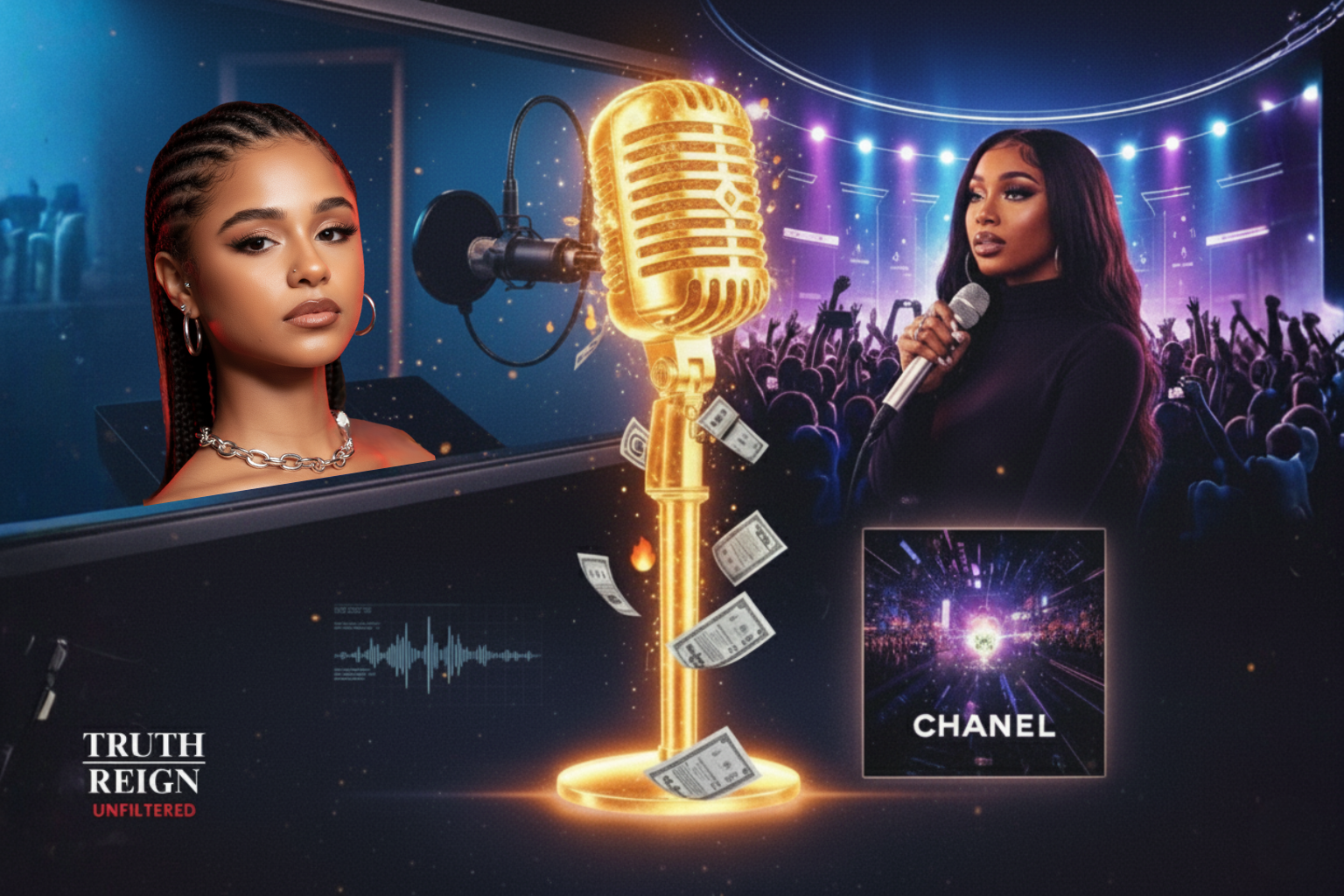
What started as a viral accusation has now become a full-on debate about creativity, control, and credibility. Yung Miami says she played an unreleased track for Tyla — and weeks later, Tyla released “Chanel”, a song that sounds eerily familiar. Tyla’s single dropped October 24 via FAX/Epic Records. Miami took to social media, calling it theft; Tyla, so far, has said nothing.
“In this industry, silence can be strategy — or guilt. The difference is who owns the paperwork.”
Beautiful’s Truth’s Take
Having worked in a Rights & Permissions Department for a publishing company, I’ve seen firsthand how this happens. And here’s the truth: you never share what you’re working on until you’ve protected it. Not the lyrics, not the hook, not the concept. Because once that idea leaves your mouth, it’s vulnerable — and by the time you realize someone ran with it, they may already have the credits, the royalties, and the recognition.
If Tyla’s “Chanel” truly aligns with the song Yung Miami previewed — lyrically, melodically, or conceptually — then yes, ethically it’s wrong. But legally? That comes down to who filed the paperwork first and whose name appears on the copyright registration.
Copyright doesn’t protect ideas — it protects expressions of those ideas. Unless Miami documented, dated, or copyrighted that version, she’s fighting a moral war with little legal armor.
And let’s be real — artists borrow from each other all the time. That’s how music evolves. But what’s not acceptable is borrowing without acknowledgment, transparency, or credit. That’s where the line gets blurred – and becomes a boundary.
Beef or Business
On the surface, it’s easy to frame this as “beef.” But underneath, this is business. It’s about who controls the rights, who gets the royalties, and who gets written into music history.
Tyla’s silence could be strategic — an effort to keep focus on her work and avoid messy optics. Yung Miami’s public frustration might be her way of reclaiming authorship before the industry erases her role. Both moves are tactical — one quiet, one outspoken — and both are about survival in a system that rewards possession more than originality.
The Lesson Behind the Shade
• Register before you reveal. Copyright your song or lyrics before sending a demo. You can even protect an unfinished draft.
• Use NDAs or split sheets early. If you’re previewing music, make sure collaborators sign something that spells out who owns what.
• Keep your receipts. Studio timestamps, email threads, file metadata — they all count in court.
• Know the difference between influence and imitation. Being inspired by someone is natural; reproducing their sound or structure without credit crosses a line.
• Protect your business like your art. Creativity is passion. Ownership is power.
The Power Play Behind the Curtain
Just know that when conflicts like this arise, it’s rarely an equal fight. Major labels protect their biggest investments. Global stars get benefit of the doubt, while smaller or independent artists often get dismissed as “bitter” or “delusional.”
And that’s where the industry reveals itself: it doesn’t always reward truth — it rewards profit. So when people say “it’s just music,” no — it’s contracts, connections, and corporate bias that decide who wins the narrative.
When Inspiration Becomes Evidence
Courts don’t judge songs by vibes — they look at substantial similarity: melody, structure, rhythm, and phrasing. The Blurred Lines case between Pharrell Williams and Marvin Gaye’s estate taught the industry that “being inspired by” can still cost millions.
So yes, artists can be influenced — but they must know where inspiration ends and infringement begins.
Creative Ownership Is Survival
I’m watching this one closely — not just to see who’s right, but who’s ready. Because in music, talent opens doors. But paperwork keeps your name on the wall.
This entire situation reminds us that business moves faster than friendship in entertainment. Protect your art like it’s your future — because it is.
Don’t complain about someone stealing from you if you didn’t secure what was yours.
“Everybody wanna create, but not everybody wanna protect what they create.”
— Beautiful Truth
Thank you all for reading–not just for opinions, but for principle, fairness, and clarity.
— Beautiful Truth
Editorial Disclaimer:
Truth Reign Unfiltered is an independent commentary platform that shines light where others stay quiet. All content published represents protected speech under the First Amendment of the United States Constitution. Opinions expressed are based on publicly available information, cited sources, and personal analysis.
I do not publish to defame—but to inform, challenge, and encourage critical thought. Accountability is not hatred. Truth is not defamation. And silence is never my strategy.